The University of Texas at El Paso (UTEP) was founded in 1914 as the Texas State School of Mines and Metallurgy, reflecting the region's rich mining history. It became part of the University of Texas System in 1919, and since then, it has evolved into a major public research university. Located in the culturally vibrant city of El Paso, UTEP serves a diverse student body of over 24,000 students, many of whom are first-generation college attendees. The university is known for its distinctive Bhutanese-style architecture, which was inspired by the Kingdom of Bhutan and stands as a unique feature on the UTEP campus.
UTEP is particularly special due to its commitment to providing access to higher education for the Hispanic community, with over 80% of its student population identifying as Hispanic. This dedication has earned it the designation of a Hispanic-Serving Institution. UTEP is also renowned for its significant contributions to research and innovation, particularly in areas that impact the U.S.-Mexico border region. The university's location provides a unique perspective on binational and bicultural issues, offering students and faculty a rich environment for research and learning.
Academically, UTEP offers a wide array of programs with strong emphasis on STEM fields, particularly in engineering, which is considered one of the best in the region. The College of Engineering is highly regarded, with programs in aerospace and mechanical engineering standing out for their quality and research opportunities. UTEP is also known for its geology and environmental science programs, which leverage the unique geographical and ecological features of the surrounding area for hands-on learning experiences. Additionally, the university's business and education programs have gained recognition for their comprehensive curricula and successful alumni.
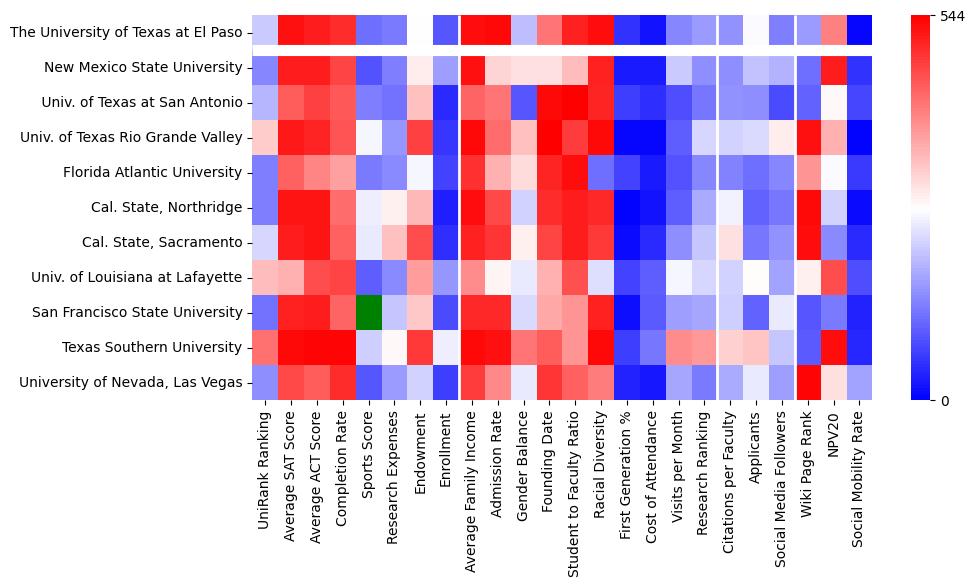
While UTEP has many strengths, it faces challenges typical of large public universities. One area of concern is the student-to-faculty ratio, which can result in larger class sizes and less individualized attention for students. Additionally, while the university has made strides in improving graduation rates, they remain lower than the national average, reflecting broader issues related to student retention and support. Despite these challenges, UTEP continues to focus on initiatives that aim to enhance student success and academic outcomes, striving to better support its diverse student body.