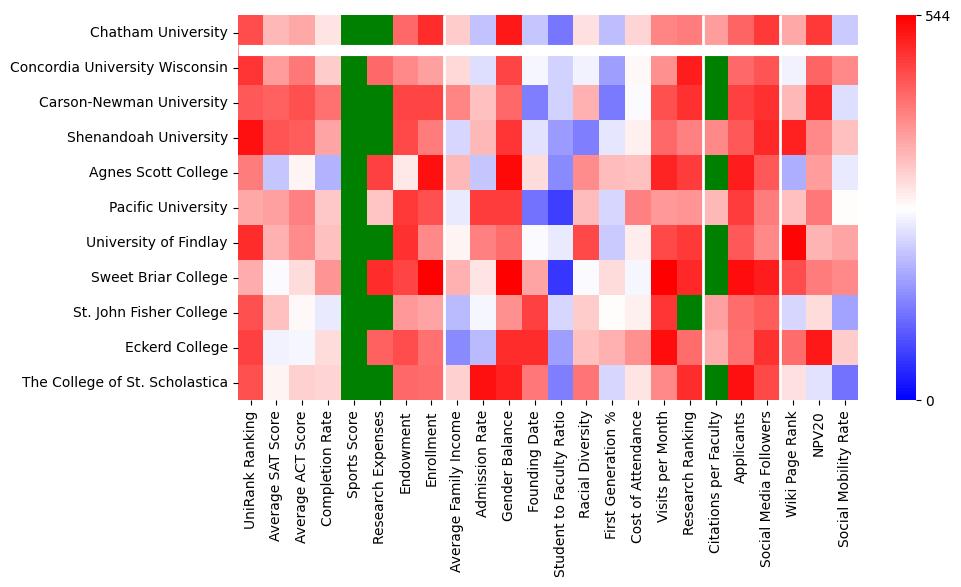
Chatham University, located in Pittsburgh, Pennsylvania, has a rich history dating back to its founding in 1869 as the Pennsylvania Female College. Originally established to provide women with higher education opportunities, it transitioned to coeducation in 2015 to better reflect the evolving educational landscape. Today, Chatham is a private university known for its commitment to sustainability and innovation, offering a wide range of undergraduate, graduate, and professional programs across three colleges: the Falk School of Sustainability & Environment, the School of Arts, Science & Business, and the School of Health Sciences.
What makes Chatham University stand out is its strong focus on sustainability and environmental responsibility. The university's Eden Hall Campus, which opened in 2014, is the first in the world built from the ground up for sustainable development. This campus serves as a living laboratory for students to engage in hands-on learning about sustainability practices. Chatham's commitment to sustainability is further evidenced by its inclusion in the Princeton Review's Guide to Green Colleges and its recognition as a Tree Campus USA by the Arbor Day Foundation. This unique focus not only enhances the educational experience but also aligns with the growing global emphasis on environmental stewardship.
Academically, Chatham University is well-regarded for its diverse and rigorous academic offerings. It provides a student-centered learning environment with small class sizes that encourage personalized interaction with faculty. The Falk School of Sustainability & Environment is particularly noteworthy, offering cutting-edge programs in sustainability and environmental science. Additionally, the School of Health Sciences stands out for its robust programs in nursing, occupational therapy, and physical therapy, which have consistently received high marks for their comprehensive curricula and successful graduate outcomes. The School of Arts, Science & Business also offers strong programs, particularly in creative writing, psychology, and business, providing students with a well-rounded education that prepares them for various career paths.
However, like any institution, Chatham University has areas for improvement. Some students have noted that the transition to coeducation brought challenges related to campus culture and integration. Additionally, while the university's commitment to sustainability is a significant strength, it may not resonate with students whose interests lie outside of this focus, potentially making them feel less connected to the university's core mission. Furthermore, despite its excellent academic programs, Chatham's relatively small size can sometimes limit the breadth of course offerings and extracurricular opportunities compared to larger universities. These aspects are important for prospective students to consider as they evaluate whether Chatham aligns with their personal and academic goals.